Answering Service or a Full Fix? How to Choose
A practical guide to the difference between AI phone answering services, virtual receptionist software, and Revenue Capture Infrastructure for phone-driven service businesses.
Most phone-driven service businesses hit the same crossroads: calls are coming in, the team is busy, and the phone becomes a constant interruption. That’s usually when owners start searching for an AI phone answering service, an AI answering service for small business, or virtual receptionist software.
Those searches make sense. They’re the labels the market has used for years. But the more important question isn’t “Which tool should I buy?” It’s what you’re actually trying to solve.
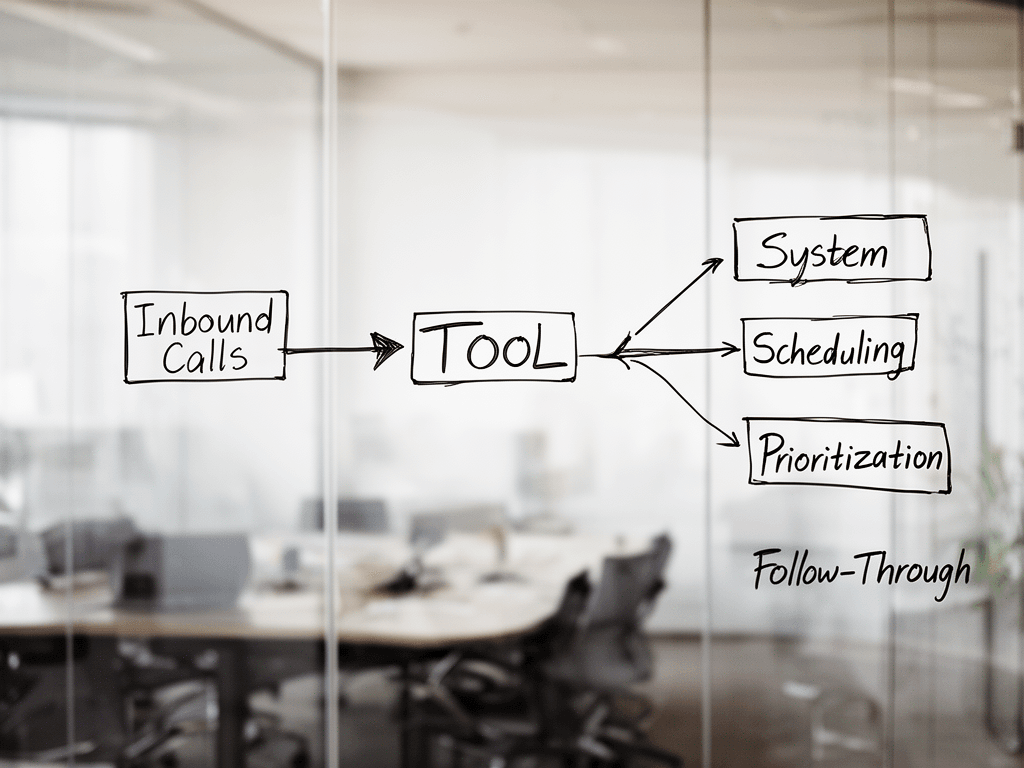
If the goal is simply coverage—making sure someone (or something) answers the phone—then a basic answering tool might do the job. If the goal is reliable conversion—ensuring inbound demand gets handled correctly, prioritized properly, scheduled cleanly, and followed through—then you’re really talking about Revenue Capture Infrastructure.
This article clarifies the difference so you can make a decision that fits your operation, not just your search query.
Why So Many Businesses Search for AI Answering Services
Service businesses run on motion. Technicians are on job sites. Office staff are juggling dispatch, parts, scheduling, and customer updates. After hours, the phone doesn’t stop ringing just because the office is closed.
That’s why “answering” solutions show up on the radar so quickly. In practice, the demand for an answering service is usually driven by one (or more) of these realities:
Calls come in during busy moments and get missed.
The team can’t consistently stop what they’re doing to handle new inquiries.
After-hours calls go to voicemail, and the next-day follow-up is inconsistent.
The business wants to protect the customer experience and reduce friction.
An AI answering service for small businesses is often appealing because it suggests a simple promise: “We’ll cover the phone so you can run the business.” And for some companies, that’s enough—especially if the call flow is straightforward and the main objective is basic responsiveness.
But answering isn’t the same as converting. And in many businesses, that gap matters.
What “AI Phone Answering Service” Usually Means
An AI phone answering service generally refers to a tool designed to respond to incoming calls automatically—often with a scripted flow, basic routing, and information capture. The best ones can handle common requests smoothly and reduce interruptions for your team.
Core Capabilities: These Tools Typically Offer
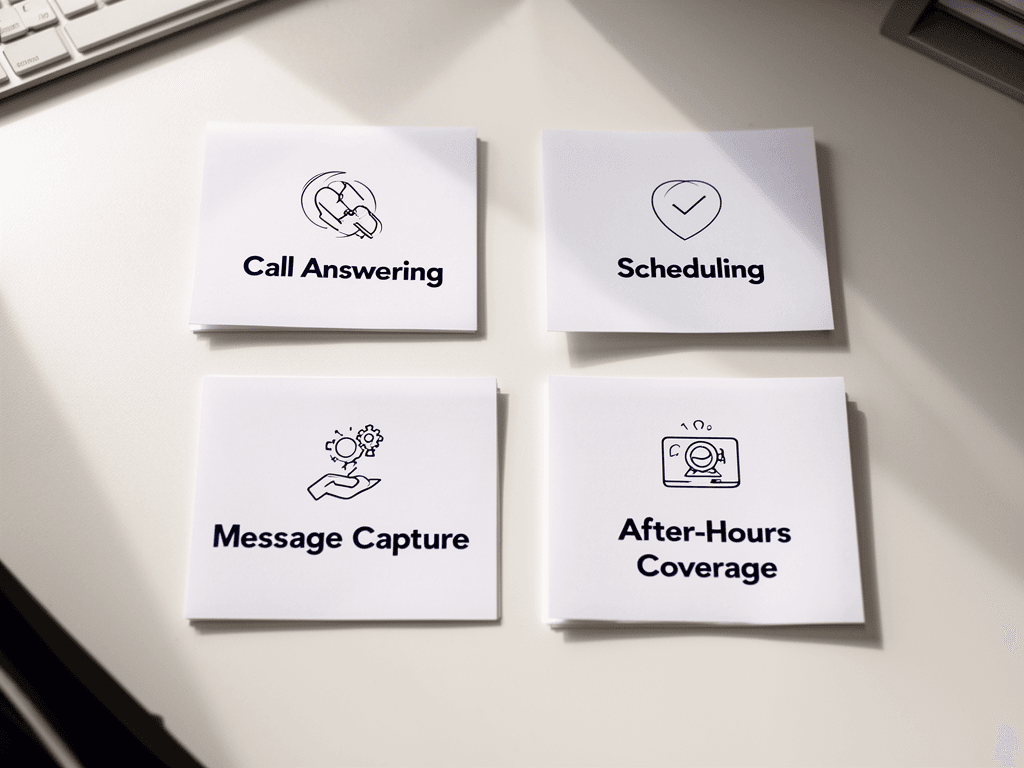
Most solutions in this category focus on a few consistent behaviors:
- Always-on coverage: Calls get answered outside standard office hours.
- Basic intake: Captures name, phone number, reason for calling, and basic details.
- Routing options: Sends calls to a department, voicemail, or a person based on prompts.
- Appointment requests: Offers scheduling in some form (depending on integrations).
- Simple FAQs: Provides basic information like hours, service areas, or common questions.
A key point: these tools are designed to handle calls, not necessarily to manage the full operational chain that turns calls into booked work.
AI Answering Service vs Virtual Receptionist Software
If you’ve looked around this space, you’ve probably noticed that “AI answering service” and “virtual receptionist software” often sound like the same thing. In many cases, they are.
The difference is usually marketing language and packaging, not a fundamentally different approach.
Why These Terms Are Often Used Interchangeably
- “Virtual receptionist software” is the older, established term. It often implies software that supports call handling, routing, and scheduling.
- “AI answering service” is the newer, trend-driven term. It often implies automation, conversational handling, and hands-off coverage.
Under the hood, both are typically positioned as ways to keep calls answered without requiring a person to pick up every time.
Here’s a neutral comparison to keep the terminology straight:
Term Primary Function Typical Use Case
AI phone answering Automated call handling After-hours coverage, service and intake basic call triage
AI answering service Same as above Smaller teams needing
for small business SMB- focused postioning responsive coverage
Virtual receptionist, Software-driven call Office routing intake software handling workflows, scheduling support
This isn’t about “good vs bad.” It’s about what a tool is designed to do—and what it isn’t designed to do.
Where Answering Tools Commonly Fall Short
Answering tools can be useful. They can reduce interruptions, provide coverage, and create consistency around basic intake. The limitation is that many of these tools are not designed to manage the operational complexity that service businesses deal with every day.
A few common mismatches show up repeatedly:
1. Coverage doesn’t automatically produce conversion
A call being answered doesn’t mean the right next step happens. If the system captures information but doesn’t reliably move the customer toward a booked job, the business still ends up with follow-up gaps.
2. Call handling isn’t the same as prioritization
Service businesses don’t treat all calls equally. A no-heat call, a water leak, and a routine tune-up request do not have the same urgency. Many tools can route calls, but fewer are designed around prioritization logic that fits real service operations.
3. Intake without follow-through still creates friction
If the tool collects details but the team doesn’t have a clean next action—schedule, confirm, route, or update CRM—the experience can still feel disjointed on both sides (customer and office).
4. Tools can operate as “standalone” layers
If the answering layer doesn’t connect cleanly into your workflows, it can create a new kind of mess: more notes, more handoffs, more manual cleanup.
The most important takeaway: tools are often built for responsiveness. Infrastructure is built for reliability end-to-end.
The Shift From Tools to Revenue Capture Infrastructure
At a certain stage, service businesses stop needing “something that answers calls” and start needing a system that reliably converts inbound demand.
That’s what Revenue Capture Infrastructure is: not a product, not a feature set—a system design approach.
Infrastructure thinking focuses on the full sequence:
- What happens when the phone rings?
- What information gets captured—and where does it go?
- How does the business decide what to prioritize?
- How does scheduling happen without creating delays?
- How does the business ensure follow-through, visibility, and consistency?
This shift matters because it changes the goal.
The goal isn’t “answer the call.”
The goal is handle inbound demand correctly, consistently, and operationally—every time.
What Revenue Capture Infrastructure Is Designed to Do
Revenue Capture Infrastructure is designed to create a dependable layer between inbound calls and booked jobs. It’s not one action—it’s a coordinated set of behaviors that make the call-to-booking process feel smooth for the customer and manageable for the team.
Always-On Call Handling
Always-on handling means customers can reach the business without hitting a dead end. That doesn’t require hype. It’s simply the difference between an inbound call becoming a conversation—or becoming a “try again later.”
The goal is consistent access with clean next steps, not just “someone answers.”
Intelligent Call Prioritization
Prioritization is where many service businesses feel the strain. When calls stack up, the question becomes: Which calls matter most right now?
Prioritization in infrastructure terms means:
- Identifying urgency (emergency vs routine)
- Recognizing value (high-intent service calls vs general inquiries)
- Routing calls correctly based on the business’s operational reality
This isn’t about “smart tech.” It’s about having a consistent decision path so your team isn’t forced to improvise under pressure.
Real-Time Scheduling
Scheduling is where speed and clarity matter. Real-time scheduling—when implemented as part of infrastructure—focuses on:
- Reducing back-and-forth
- Preventing delays
- Keeping bookings consistent with your calendar and availability
The goal is to make scheduling feel natural for customers and lightweight for your team.
Consistent Follow-Through
Follow-through is what prevents the “we’ll call you back” black hole. Infrastructure-backed follow-through typically includes:
- Clear call summaries
- Visibility into what happened and what’s next
- Fewer dropped handoffs and forgotten callbacks
When follow-through is consistent, you don’t need heroics from your staff to keep things moving.
When an Answering Tool Is Enough (And When It’s Not)
Not every business needs a full infrastructure build. Sometimes a simple answering tool is perfectly appropriate—especially if your operation is small, your call types are predictable, and your scheduling process is straightforward.
The decision becomes clearer when you compare coverage needs versus operational complexity.
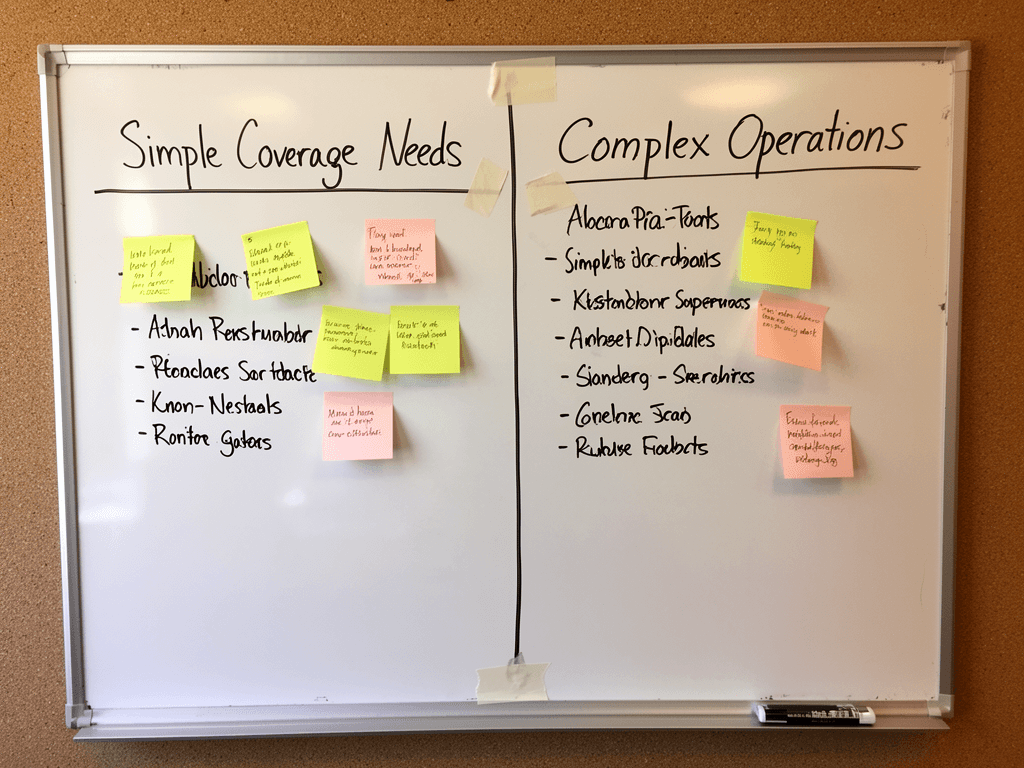
An answering tool is often enough when:
- You mainly need after-hours coverage.
- Calls are simple: hours, basic requests, straightforward scheduling.
- Your team has a reliable process to follow up quickly.
- You don’t require nuanced prioritization or routing logic.
Infrastructure becomes more important when:
- Calls vary in urgency and value (routine vs emergency vs high-ticket).
- Your team is stretched and follow-up consistency is difficult.
- You need prioritization logic that fits real dispatch realities.
- You want visibility and consistency across the entire inbound journey.
This section is worth reading twice: choosing the “wrong” layer doesn’t always show up immediately. It shows up in the daily friction your team feels and the customer experience your business delivers.
How Rise Vista Approaches Revenue Capture
Rise Vista’s approach is built around a simple idea: inbound demand should be handled like infrastructure, not like a task that depends on whoever is available at the moment.
That means prioritizing system behavior over feature lists:
- Build a reliable call-handling layer that supports the team instead of replacing it
- Establish consistent prioritization and routing rules
- Create clean scheduling and clear next steps
- Keep visibility high so owners and staff aren’t guessing what happened
The aim is operational reliability—so the business can stay responsive without burning out the people running it.
Choosing the Right Approach for Your Business
If you’re evaluating an AI phone answering service or virtual receptionist software, don’t start by asking, “Which tool is best?” Start with:
- What does our inbound call flow actually look like?
- Where does friction occur—answering, routing, scheduling, follow-through?
- What part of the process depends on heroic effort from staff?
- What needs to be consistent even when we’re busy?
A tool can be a solid first step. Infrastructure is what you build when you want the phone-to-booking experience to be dependable—not just “covered.”
Frequently Asked Questions
What’s the difference between an AI answering service and Revenue Capture Infrastructure?
An AI answering service is typically focused on call handling and intake. Revenue Capture Infrastructure is focused on the full system that turns inbound demand into booked work—coverage, prioritization, scheduling, and follow-through.
Can these systems work alongside my existing tools?
Yes. In many cases, the best approach is to integrate call handling into your current workflows so information, scheduling, and next actions are consistent rather than scattered.
Does this replace my staff?
No. The intent is to reduce strain and increase consistency. Infrastructure supports the team by handling repeatable steps reliably, so humans can focus on service delivery and decision-making.
How should I evaluate whether we need infrastructure or just coverage?
Look at operational complexity. If your calls vary widely in urgency and value, if follow-up depends on “getting to it later,” or if scheduling creates delays, infrastructure is usually the better long-term approach.
Which industries tend to benefit most from Revenue Capture Infrastructure?
Phone-driven service businesses—HVAC, plumbing, electrical, and similar home services—often benefit because their inbound demand is time-sensitive and operationally complex.
Conclusion
Choosing between an AI phone answering service and Revenue Capture Infrastructure isn’t really a debate about technology. It’s a decision about system design.
If you need basic responsiveness, an answering tool may fit. If you need consistent conversion—where inbound calls are handled correctly, prioritized appropriately, scheduled cleanly, and followed through with visibility—then infrastructure is the more accurate framework.
The best choice is the one that matches your reality: how your calls come in, how your team operates, and how consistent you want the call-to-booking experience to be.
This is one example of how Rise Vista works. We help growing businesses find where they are losing revenue, time, and opportunity, then fix it with practical AI and automation. AnswerCapture is our specialized call-capture offering. If you're not sure where to start, tell us where work gets stuck. Let's Talk About Your Business: https://risevista.io/contact